Interviews
Interview: A Media Literacy Teacher on What Readers Get Wrong
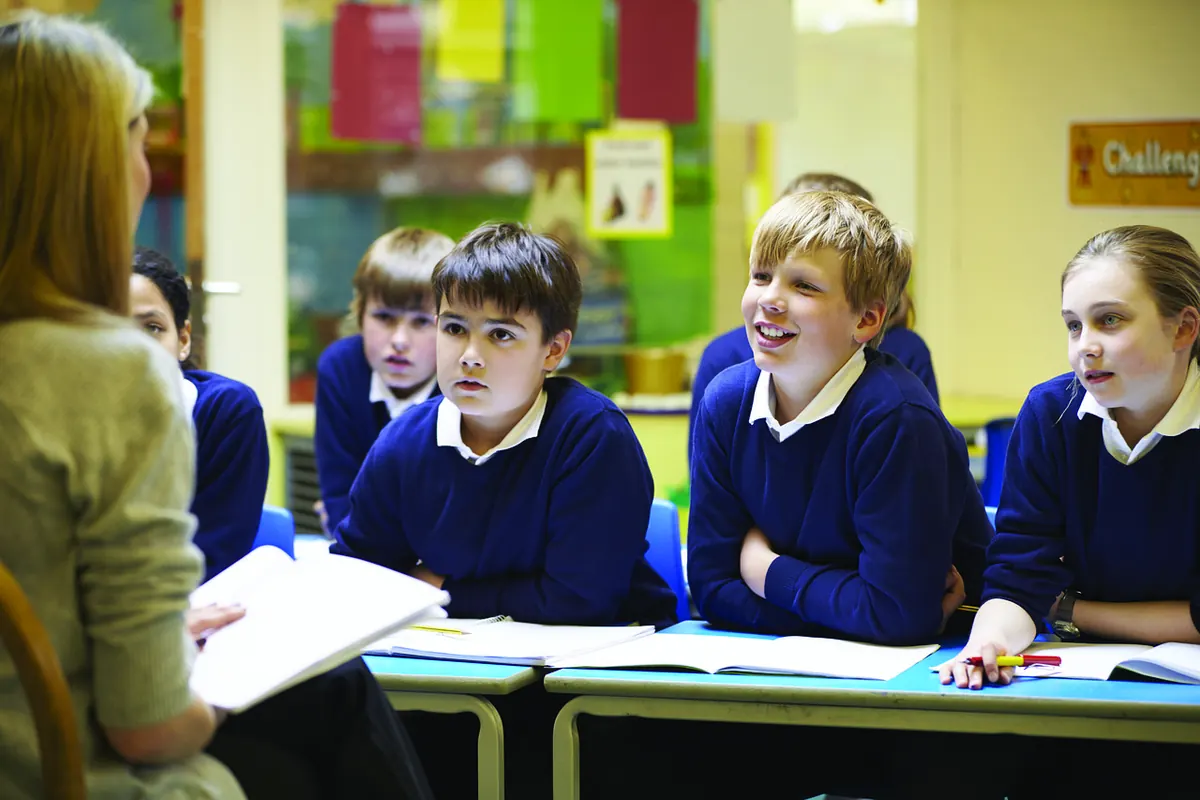
Every autumn, the same thing happens in her classroom. Teenagers walk in convinced they can spot a fake story from across the room. A few weeks later, most of them have quietly revised that opinion. She has taught media literacy to high school students for years, and she agreed to talk about the habits her students unlearn first — and the ones that take their place. She asked that her name and school be left out, so she can describe her students' mistakes without putting anyone on the spot.
The surprise is not that they fall for obvious hoaxes. It is that they fall for ordinary writing that happens to look like journalism. Here is what she says changes.
The Most Confident Readers Are Usually the Easiest to Fool
Fluency is the trap. A post with complete sentences, a serious-looking chart and a calm tone reads as reliable. Students who have been taught to write that way themselves assume someone checked the writing before it went out. Usually nobody did. A typo is a weak signal, but clean prose is not a signal at all.
So she asks them to slow down at the exact moment they feel certain. Certainty is not evidence. It is a feeling produced by familiarity, and familiarity can be manufactured by lunchtime — a headline repeated by a handful of accounts starts to sound like something everyone already knows.
"I Saw It Everywhere" Is Not a Source
Ask a student where a claim came from and you will often hear that it was in three different places. Those three places are frequently the same paragraph, copied. Or the same screenshot, reposted by accounts that follow one another. Repetition raises the volume of a claim without adding a single fact to it.
She uses a comparison her students understand immediately: hearing the same rumour from six people in one corridor does not mean six people know something. It means six people heard it from the same person.
The classroom exercise is blunt. Take a claim and trace where it first appeared. Not where it was loudest — where it started. Students are usually startled by how fast the trail runs out: a screenshot with no context, an anonymous account, a headline with no story under it, or a "report" that links back to itself.
The Check Most Readers Skip: Going Upstream
Most people stop at the article. The habit worth building is one step further: find what the article is standing on. A document, a filing, a dataset, a firsthand account, a press release. If there is nothing underneath, that is worth knowing too.
Three questions that do most of the work
- Who is making the claim, and how would they know? Someone with direct knowledge, someone repeating what they heard, and an account that exists mainly to repost are three different things. That distinction matters more than a job title.
- What would it look like if this were wrong? If no conceivable evidence could contradict the claim, you are not reading a report. You are reading a position.
- What is missing? Missing dates. Missing numbers. Missing anyone affected by the story. Gaps are often more revealing than the sentences that made it in.
She is careful to say that this is not a hunt for bias in every sentence. It is a check on whether anything at the centre of the story can be examined at all.
Trust Is a Shortcut, Not a Check
Trust is necessary. Nobody can verify everything they read before breakfast, and a functioning life depends on reasonable shortcuts. The mistake is treating trust as the end of the process instead of the start of it.
Students tend to trust three things: a friend's share, an account with a large following, and a website that looks professional. She points out that design is cheap. A logo, a domain and a polished layout can be assembled in an afternoon, and a big following measures reach, not care. "My friend sent it" tells you where a message travelled, not where it came from.
Her rule for the classroom is simple: trust can decide what you read first. It should not decide what you repeat.
Skepticism Has a Ceiling
Some students overcorrect. After a few months of checking, they announce that everything is manipulated and nothing can be believed. She treats that as a failure rather than progress, because cynicism is gullibility with better posture. If nothing can be trusted, you never have to do the work of deciding what deserves more or less of it.
What she wants instead is calibrated trust: some sources have earned more of it, and you can explain why in a sentence. That means accepting that good outlets get things wrong and correcting them, that a single error does not erase a record, and that "I don't know yet" is a complete answer rather than a cop-out.
She also teaches students to be wrong out loud. Being corrected in public is survivable, and learning to say "I had that wrong, here is why" is a skill most adults still avoid.
What Actually Changes by the End of the Year
- They read past the headline before forming a view, because headlines are built to travel and stories are built to be accurate.
- They open the original document rather than a summary of a summary.
- They check the date, since old news resurfaces looking new.
- They ask who benefits from them believing something, without assuming the answer is always sinister.
- They notice their own reaction. Strong anger or a flush of vindication is a cue to slow down, not a reason to hit share.
A Ten-Minute Routine Anyone Can Borrow
Her advice for adults is the same as for her students, minus the homework. Before passing something along, answer four questions: What is the claim, in one sentence? Where did it start? When was it published? Could I explain, out loud, why I believe it?
If the last question is a struggle, don't share it. Not because sharing is dangerous, but because you are handing someone else a job you could have finished in five minutes.
One more point she makes. Do this where people can see you. Students learn the habit by watching an adult stop mid-scroll, say "hang on," and look something up. It sticks better when it costs you a little time and a little pride — which is roughly the price of being harder to fool.
Photo: 14995841 / Pixabay
Related Articles